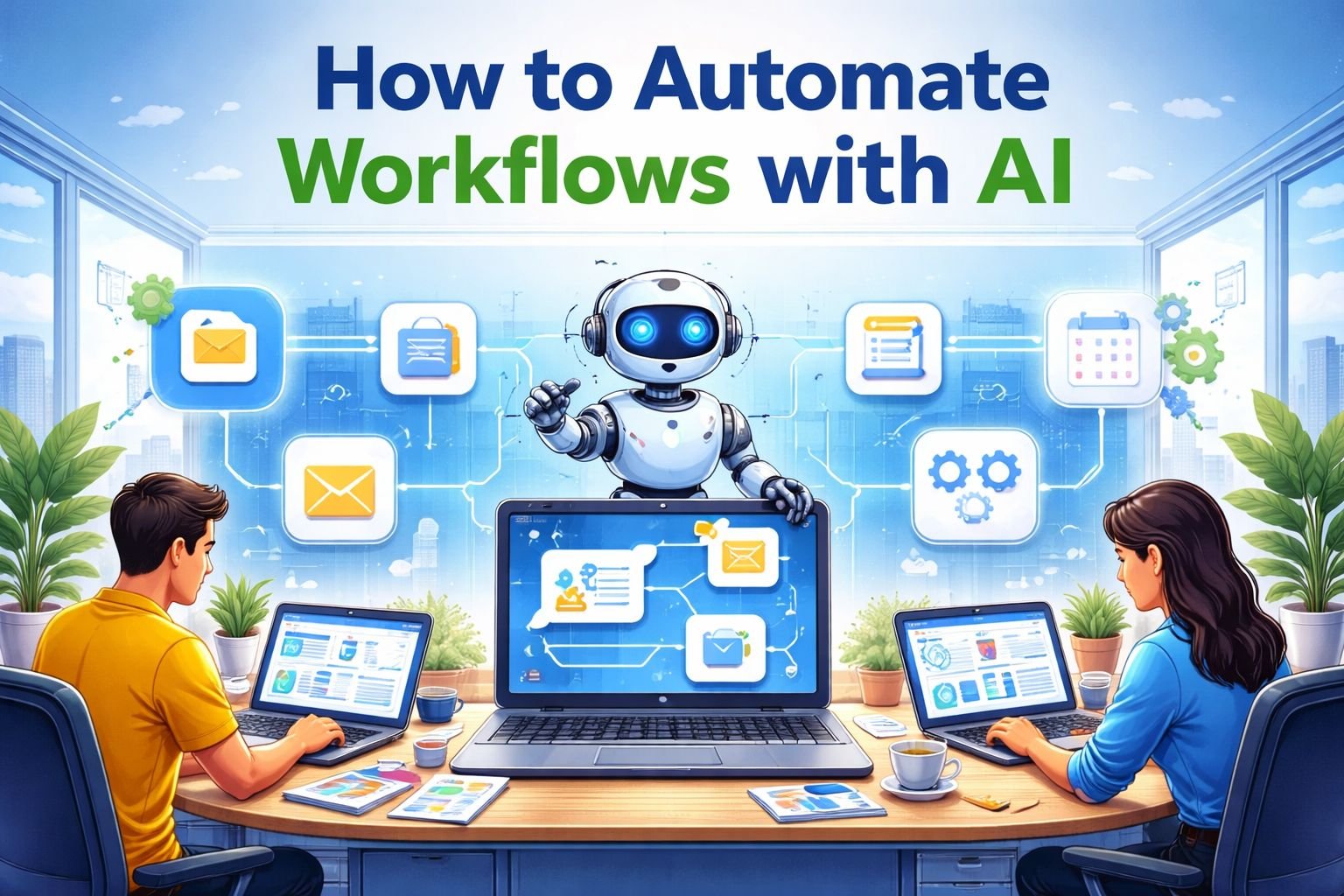
In today’s fast-moving digital world, businesses and individuals are constantly looking for ways to save time and improve efficiency. One of the most powerful solutions is learning how to automate workflows with AI. Artificial intelligence is no longer just a futuristic concept it’s a practical tool that can simplify daily operations, reduce manual work, and boost productivity.
Whether you’re running a business, freelancing, or managing daily tasks, AI workflow automation can completely transform how you work.
What Does It Mean to Automate Workflows with AI?
Automating workflows with AI means using intelligent systems to handle repetitive tasks and processes without constant human input.
Instead of manually performing actions like sending emails, updating data, or managing schedules, AI tools take over and execute these tasks automatically. The goal is simple: reduce effort, minimize errors, and allow you to focus on more strategic and creative work.
Why AI Workflow Automation is Important
In traditional workflows, a lot of time is wasted on repetitive and low-value tasks. AI changes this by making processes smarter and faster. When workflows are automated, businesses can operate more efficiently, employees can focus on meaningful tasks, and overall productivity increases.
fAI doesn’t just follow instructions it learns from patterns and improves over time, which makes automation even more powerful.
How AI Workflow Automation Works
Understanding Your Workflow
The first step in automating workflows with AI is identifying the tasks you perform regularly. These could include responding to emails, managing leads, updating spreadsheets or handling customer queries.Once you understand your workflow, it becomes easier to decide what can be automated.
Using AI Tools and Integrations
AI tools connect different apps and systems to create a smooth workflow. For example, when a new lead fills out a form, the system can automatically store their data, send a welcome email and notify your team.
These tools often use machine learning and smart triggers to perform actions based on specific conditions.
Continuous Learning and Optimization
One of the biggest advantages of AI is that it learns from data. Over time, AI systems improve their performance, make better decisions, and optimize workflows without requiring constant updates.
Real Life Examples of AI Workflow Automation
Automating Customer Support
AI chat systems can handle customer queries instantly, reducing response time and improving user experience. Instead of hiring large support teams, businesses can rely on AI to manage common questions and issues.
Managing Marketing Campaigns
AI can automate email campaigns, schedule social media posts and analyze customer behavior. This helps businesses target the right audience at the right time.
Streamlining Business Operations
From invoice processing to employee onboarding, AI can automate internal operations, making businesses more efficient and organized.
Benefits of Automating Workflows with AI
AI workflow automation saves time by reducing manual work and speeds up processes significantly. It also improves accuracy, as machines are less likely to make errors compared to humans.
Another major advantage is scalability AI systems can handle increasing workloads without additional resources. In addition, automation enhances productivity by allowing individuals and teams to focus on high-value tasks instead of repetitive activities.
Challenges You Might Face
While AI automation offers many benefits, it’s not without challenges. Setting up automation systems can take time, especially if your workflows are complex. There may also be a learning curve when using new tools.
Another concern is data quality. AI systems depend on accurate data, so poor data can lead to incorrect results. However, with proper planning and implementation, these challenges can be managed effectively.
The Future of AI Workflow Automation
The future of AI automation is incredibly promising. As technology continues to evolve, workflows will become even more intelligent and adaptive.
AI will not only automate tasks but also predict needs, suggest improvements and make decisions in real time. Businesses that adopt AI early will have a strong competitive advantage in the coming years.
Final Thoughts
Learning how to automate workflows with AI is one of the smartest moves you can make in today’s digital landscape. It helps you save time, reduce errors, and increase productivity without increasing effort.
Instead of working harder, AI allows you to work smarter. By integrating automation into your daily processes, you can focus on growth, creativity, and achieving better results.
Want to automate your workflows with AI? Let Tecrix design smart automation systems that save time and scale your business effortlessly.
Frequently Asked Questions (FAQs)
1. What does it mean to automate workflows with AI?
Automating workflows with AI means using artificial intelligence tools to handle repetitive tasks and processes automatically without manual effort.
2. How can beginners start AI workflow automation?
Beginners can start by identifying repetitive tasks and using simple AI tools to automate actions like emails, data entry, or scheduling.
3. What are examples of AI workflow automation?
Examples include automated email responses, chatbots for customer support, lead management systems, and task scheduling tools.
4. Do I need coding skills to automate workflows with AI?
No, many AI automation tools are no-code or low-code, allowing users to create workflows without programming knowledge.
5. Which industries use AI workflow automation?
Industries like marketing, healthcare, e-commerce, finance, and customer support widely use AI automation to improve efficiency.
6. Is AI workflow automation expensive?
Costs vary depending on tools and complexity, but many affordable and scalable solutions are available for individuals and businesses.
7. Can AI automation reduce human jobs?
AI automation mainly reduces repetitive tasks and supports employees, allowing them to focus on more important and creative work.
8. How secure is AI workflow automation?
Most AI tools follow strong security protocols, but it’s important to choose reliable platforms and ensure data protection.
9. Can AI workflows be customized?
Yes, AI workflows can be customized based on business needs, goals, and specific processes.
10. What is the future of AI workflow automation?
The future includes smarter systems that can predict tasks, improve decision-making, and fully automate complex workflows.